BLOG
Designing a swimming pool: natural stone, paving, and continuity with the home
Designing an outdoor area with a swimming pool requires an approach that brings together architecture, materials, and landscape; it is not just about placing a pool in the garden, but about building a space that is coherent with the house, capable of functioning throughout the summer season and maintaining a stable aesthetic quality over time. In this context, natural stone and outdoor paving take on a central role: they define the pool edge, guide pathways, and build the relationship between water, vegetation, and architecture.
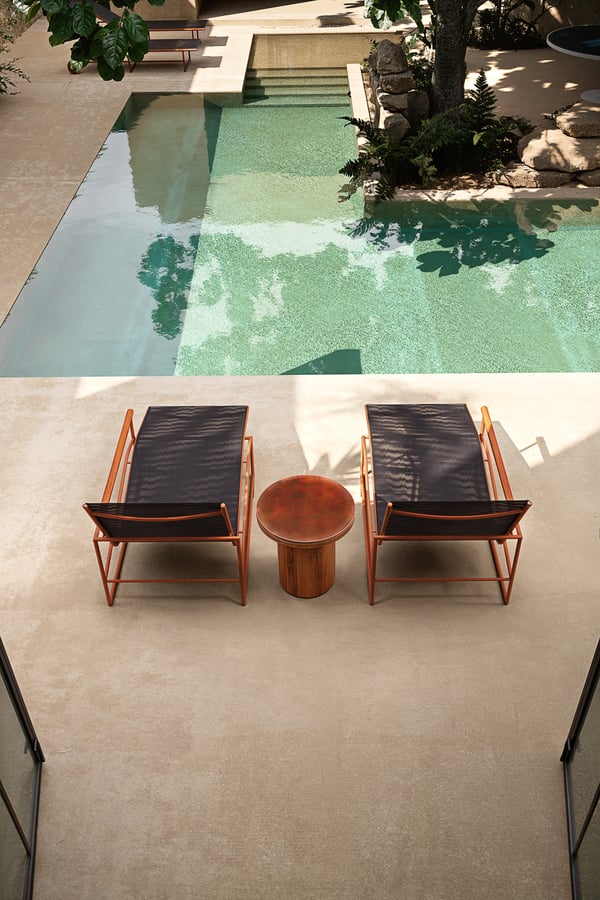
Design must start from several very concrete technical considerations: sun exposure, water drainage, surface safety, and continuity between wet zones and relaxation areas. The materials used must therefore be weather-resistant, non-slip, and stable even in the presence of thermal fluctuations. Travertine, marble, and other natural stones are chosen precisely for this combination of performance and visual quality; surfaces that do not merely cover, but contribute to building the overall character of the outdoor space. In recent years, attention has also grown toward more flexible solutions, such as above-ground pools clad in travertine, structures that can be installed with simplified procedures when they respect certain heights and installation depths; these configurations allow for the creation of an elegant relaxation area without complex construction work, while still maintaining an aesthetic result consistent with the architecture of the house.
Paving and pool edges: safety, materials, and proportions
The paving around the pool is one of the most delicate elements of the project; it must ensure safety during use, resist water and sun, but at the same time contribute to the visual balance of the space. Natural stones used outdoors possess characteristics that respond well to these needs: slightly textured surfaces, wear resistance, and a good capacity to dissipate heat accumulated during the day.
Travertine, for example, is often chosen for the pool edge because it maintains a relatively stable temperature even under direct sunlight; its light tone reflects light and helps make the environment brighter. Marble, with its more prominent veining, introduces a more scenographic character; used for edges, steps, or integrated seating, it creates an interesting dialogue with the water surface.
The design of outdoor surfaces requires several technical considerations:
- Choose non-slip or lightly sandblasted finishes for areas immediately adjacent to the pool
- Provide a minimum slope in the paving to facilitate water drainage
- Avoid excessive color contrasts between the pool edge and the surrounding paving
- Use stone formats consistent with the scale of the outdoor space
The pool edge does not only perform a technical function; it also represents a threshold between the water and the relaxation area. An edge made with continuous slabs, for example, makes the pool more integrated into the garden; smaller modules or more evident workmanship create a decorative rhythm that recalls more classical architectural languages.
In contemporary spaces, it is also common to introduce shallow areas at water level—surfaces where one can sit or lie down with feet immersed—which require particularly resistant materials and non-slip surfaces. In these areas, natural stone maintains high performance, especially when correctly treated and sealed.
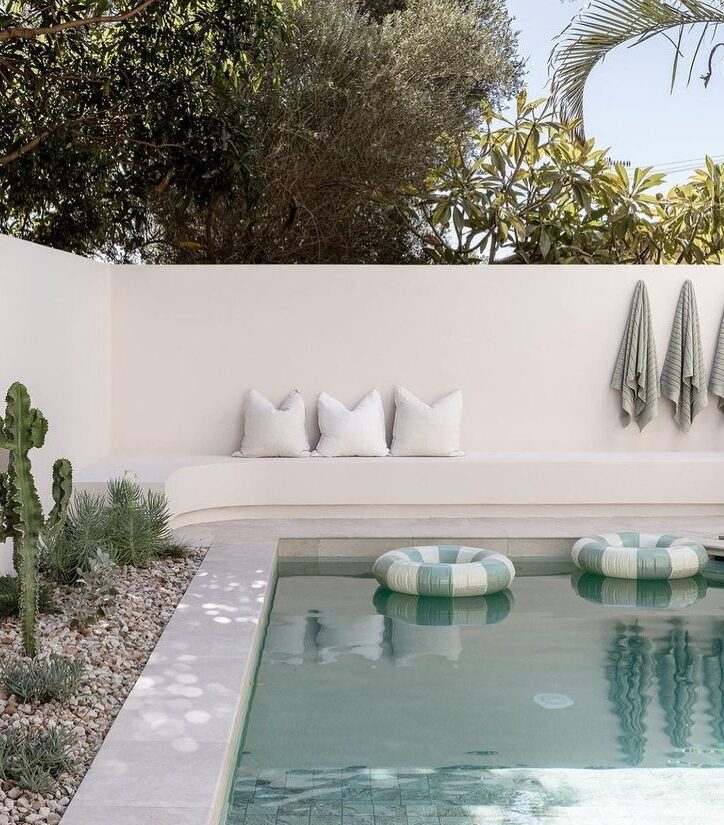
Continuity between interior and exterior and outdoor cladding
A successful outdoor project is not limited to the pool; it involves the entire relationship between home and garden. Continuity between interior and exterior is one of the most widely used principles in contemporary architecture: paving that continues beyond the threshold, materials that repeat between the living room and terrace, and surfaces that maintain a consistent color palette. Natural stone is particularly well-suited to this design strategy; the same material can be used for the interior flooring of the living area and for outdoor surfaces, possibly with a more textured finish to improve safety. This type of continuity reduces the perception of separation between home and garden, transforming the pool into a true extension of the living space.
In addition to paving, other outdoor elements can also be clad in natural stone.
Outdoor showers, retaining walls, integrated seating, or small garden fireplaces become opportunities to use the same material as the pool edge, maintaining formal coherence and strengthening the architectural quality of the space.
In many projects, stone is also used to define functional elements: benches integrated into the paving, large steps connecting different levels of the garden, and surfaces for placing sun loungers or small tables. The goal is not to fill the space with decorative materials, but to build a sequence of solid and durable surfaces that accompany the daily use of the outdoor area.
Designing an outdoor space with a pool and natural stone paving therefore means working on materials, proportions, and continuity with the architecture of the house; a balance between technical aspects and aesthetic quality that allows the garden to be transformed into a truly livable space, designed for relaxation but planned with the same attention reserved for interior environments.
Photo credits: mohd / Pinterest