BLOG
Natural Stone Flooring for Bathrooms: How to Choose Durable and Balanced Materials
In a bathroom project, the choice of materials is of decisive importance; it is in fact one of the most heavily used areas of the home, characterized by constant humidity, temperature fluctuations and intensive daily use.
In this context, natural stone for bathroom flooring represents a well-established solution, long used in both residential architecture and spa and hotel environments; the reason lies in its durability, ease of maintenance and ability to maintain stability over time. Natural stone also offers a very wide material variety: polished or more textured surfaces, light or deep tones, delicate or pronounced veining. This variability allows the material to be adapted to different design languages, from contemporary bathrooms with essential geometries to more traditional settings, where the presence of natural surfaces contributes to creating a warmer and more layered perception of space.
A stone floor does not merely serve a technical function; it defines the visual foundation of the environment, establishes the chromatic palette of the project and dialogues with other materials present, such as wood, metals or ceramic coverings. For this reason, the choice of stone must be approached within a clear design vision that takes into account both the aesthetics and the practical requirements of the bathroom environment.
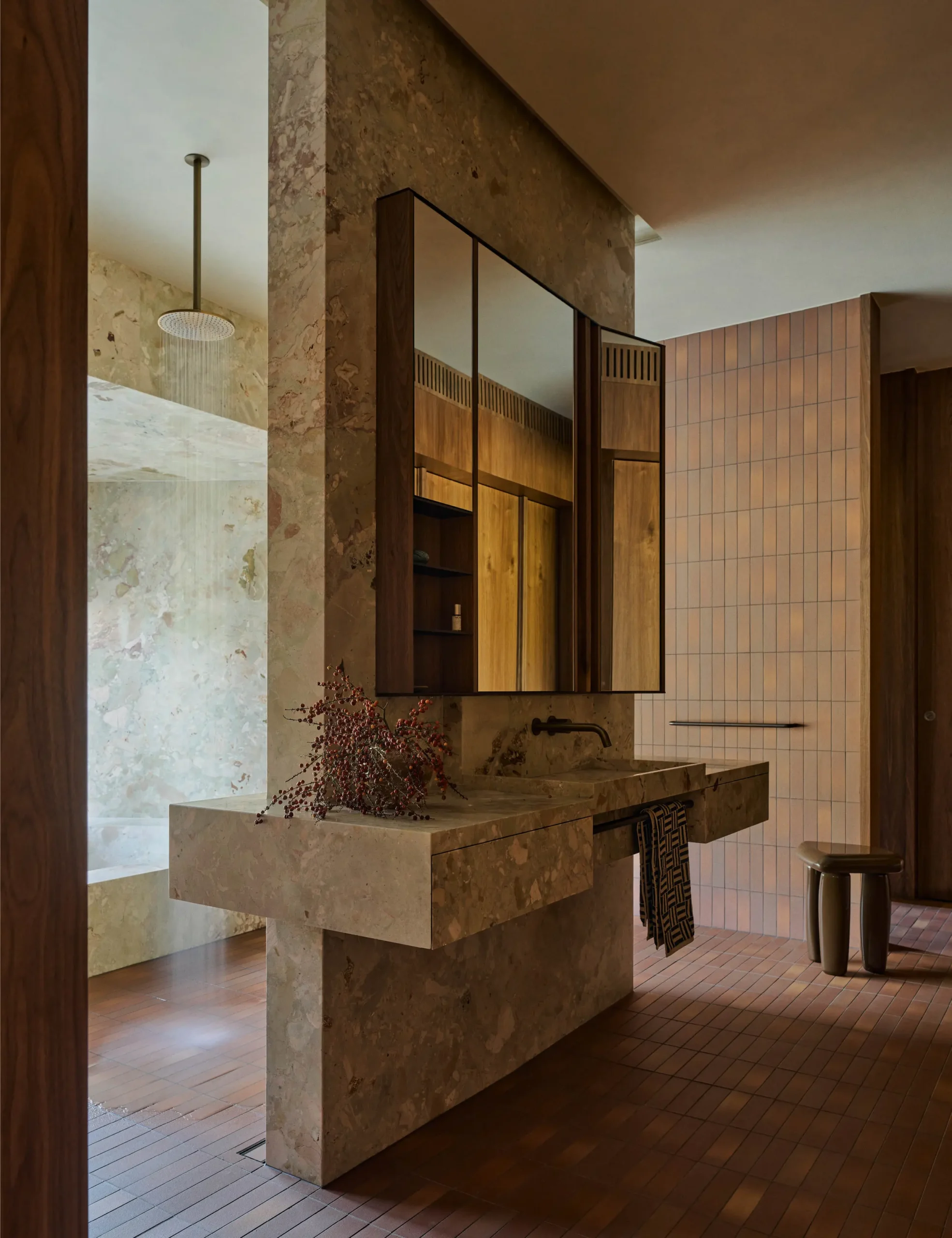
Which Stone to Choose for Bathroom Flooring
Among the natural stones most commonly used in bathrooms are marble, granite and limestone; each material possesses specific characteristics that influence the final appearance of the space and its behavior over time. Marble is probably the stone most associated with bathroom environments; its veining, often light and fluid, introduces visual movement to surfaces and contributes to making the environment brighter: it is a material that requires proper sealing and careful maintenance, but offers a very balanced aesthetic result when used for flooring, wall coverings or vanity tops.
Granite, on the other hand, is valued primarily for its durability; it is a compact stone, less sensitive to scratches and stains, particularly suitable for surfaces subject to frequent use. In bathroom flooring it ensures stability and longevity, maintaining the original characteristics of the surface over time; limestone presents a softer and more natural texture; its tones tend toward beiges, light grays and earth colors, qualities that make it particularly suitable for bathrooms designed with natural palettes or more relaxed atmospheres.
When selecting the material for flooring, it is useful to evaluate some fundamental design aspects:
- resistance to humidity and ease of maintenance over time
- chromatic consistency with walls, furnishings and fixtures
- the type of surface finish, polished or slightly textured to improve grip
- the size of slabs or tiles, which affects the perception of space
A floor made with large-format slabs, for example, tends to make the environment more continuous and orderly; smaller formats or articulated laying patterns instead introduce a more decorative character.
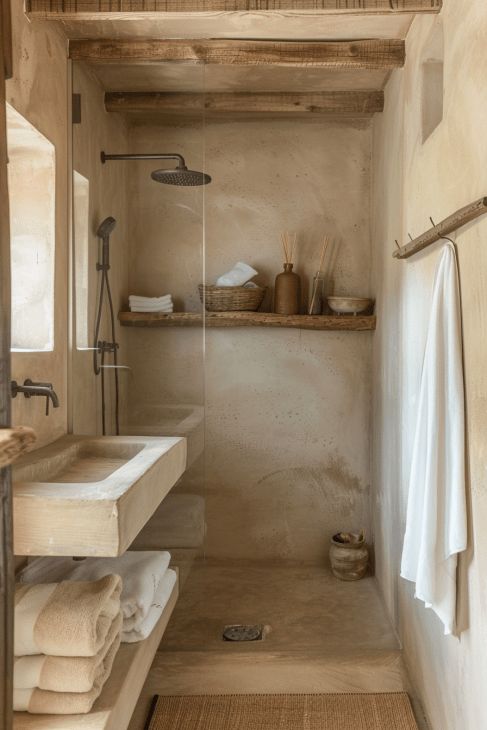
Colors, Textures and Relationship with Bathroom Style
The choice of natural stone directly influences the atmosphere of the bathroom, especially through color and texture. Light tones — whites, beiges, delicate grays — help to reflect light and make the environment more spacious and bright; they are often used in contemporary bathrooms, where clean surfaces, simple lines and essential chromatic palettes prevail.
Stones with warmer tones or pronounced chromatic variations instead find space in projects with a more traditional character; environments where layered materials, natural woods and more decorative details create a welcoming and less minimalist atmosphere – in these contexts, even slightly worked surfaces, with more textured edges or less uniform textures, contribute to reinforcing the perception of material authenticity. A further element to consider concerns the relationship between flooring and other bathroom coverings; in many contemporary projects, the same stone used for the floor is repeated in the shower or on a main wall; this material continuity helps to create a more coherent and visually orderly space, reducing the fragmentation of surfaces.
The color of the stone also affects the psychological perception of the environment.
Neutral and natural tones — beiges, warm grays, soft greens — contribute to creating a sense of calm and stability; excessively contrasting or very dark surfaces, when used on large areas, tend instead to make the space more intense and visually dominant; designing a natural stone floor for the bathroom therefore means working on multiple levels simultaneously: material durability, chromatic consistency, relationship with other coverings and quality of installation. A well-calibrated project allows for solid and legible environments, in which stone is not used as a simple decorative covering, but as a structural element capable of defining the identity of the space.
Photo credits: thedesignfiles /homecompanionmag