BLOG
How to choose a swimming pool based on the landscape: materials, shapes, and architectural integration
Designing a swimming pool does not simply mean defining dimensions and depth; it means, first and foremost, interpreting the context in which it is placed and building a balance between architecture, materials, and landscape. A well-designed pool does not appear as an added element, but as a natural extension of the outdoor space, capable of creating a dialogue with the terrain, vegetation, and the house. In this process, the choice of shape, natural stone flooring, and cladding becomes decisive, because every context requires different solutions, from both a technical and aesthetic point of view.
Pools and context: shapes and geometries in relation to the landscape
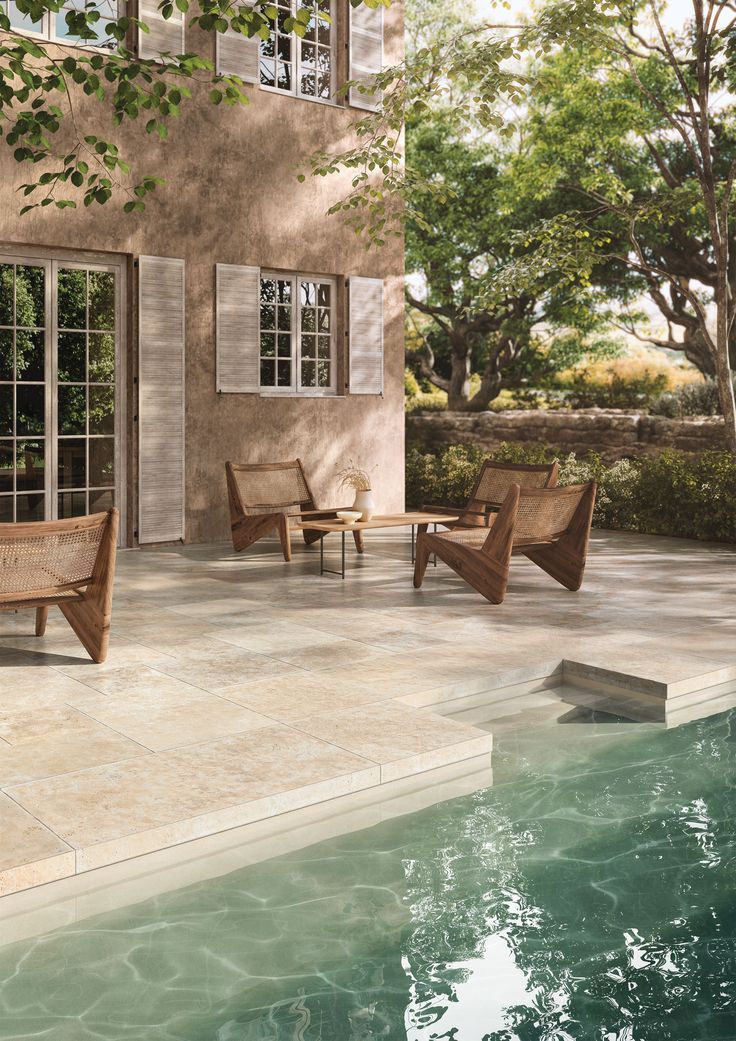
The first element to consider is the morphology of the outdoor space; a flat garden, sloping ground, or a more natural context require different design approaches. In regular environments and contemporary architectures, pools tend to take on precise geometric shapes, with sharp edges and continuous surfaces; here, materials such as travertine or marble processed with uniform finishes help to strengthen the visual cleanliness of the project.
Conversely, in more organic contexts or those immersed in greenery, less rigid lines are preferred, with edges that integrate into the landscape and surfaces that recall the texture of local stone.
The pool must not emerge artificially but adapt to the surrounding nature, also through variations in elevation or partially inground installations; in this sense, above-ground pools clad in natural stone also represent an interesting solution; if carefully designed, they can integrate perfectly into the context, especially when the exterior cladding matches the flooring or other architectural elements present in the space.
Flooring and visual continuity between indoor and outdoor spaces
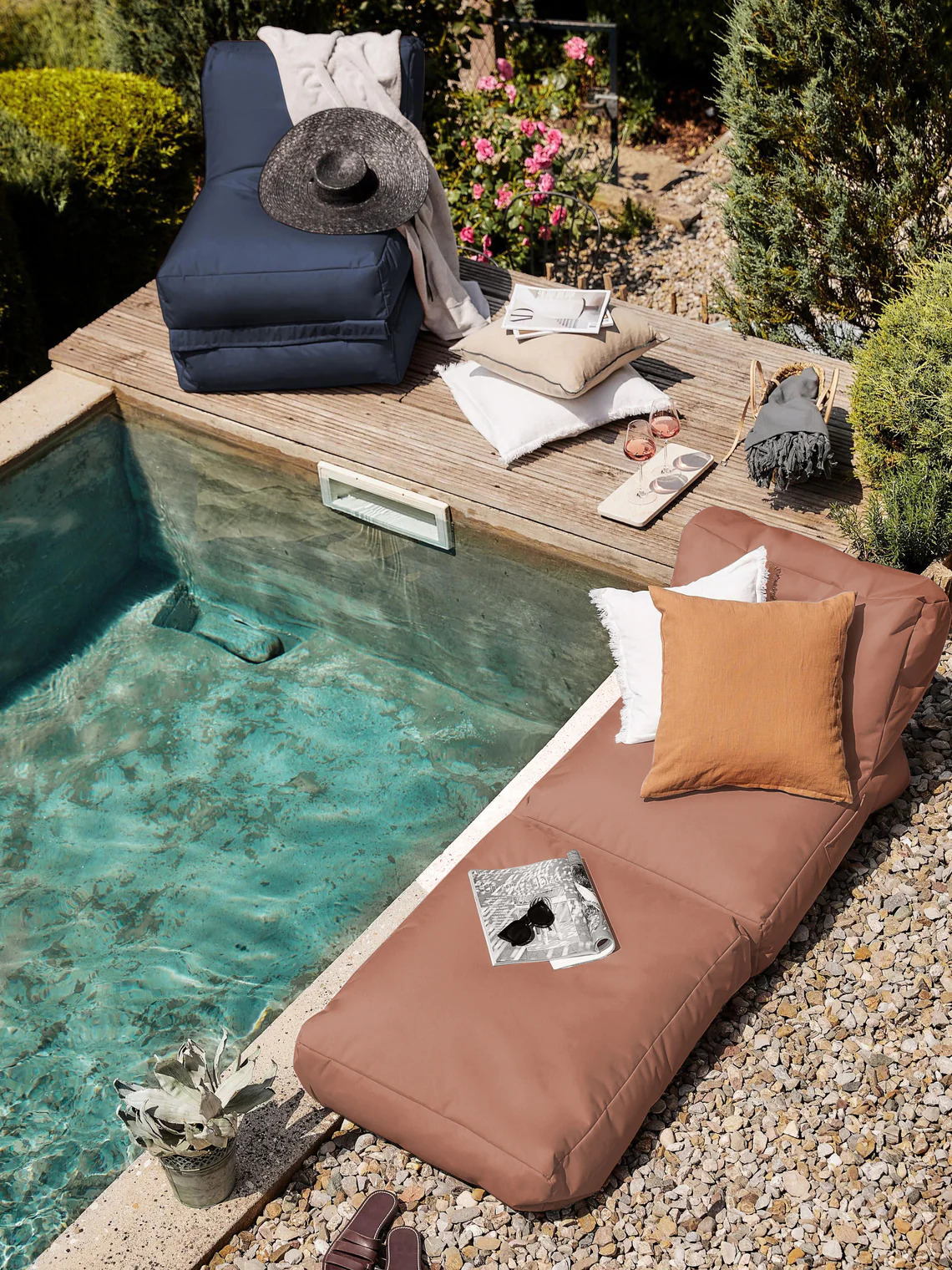
A second aspect concerns the continuity between the interior and exterior; the pool is not an isolated element, but part of a broader system that includes flooring, pathways, and relaxation areas. Using the same natural stone both indoors and outdoors allows for the construction of a fluid transition, reducing the perception of separation between environments.
Flooring around the pool must meet precise requirements: water resistance, non-slip surfaces, and stability over time. Travertine, for example, is often used for its ability to maintain a balanced temperature and for its uniform aesthetic yield; marble, on the other hand, introduces a higher level of characterization, especially in more formal contexts.
The design must also take into account the distribution of spaces: shaded zones, sunbathing areas, and transit paths. In this sense, natural stone allows for the creation of a clear visual hierarchy, differentiating surfaces without interrupting the overall harmony.
- evaluate the architectural context before defining shape and materials
- choose flooring consistent with the interior to ensure continuity
- use non-slip finishes in areas most exposed to water
- integrate functional elements such as seating or steps into the overall project
A pool designed in relation to the landscape not only improves the quality of the outdoor space but also increases the perceived value of the entire home, transforming the garden into a truly livable environment.
Photo credits: Dordini / Westwing