BLOG
How to combine wood and stone in interiors while maintaining balance and visual lightness
The combined use of wood and natural stone in interiors is a well-established design solution; both materials have been present in architecture for centuries and continue to find their place even in contemporary environments. The reason is simple: they possess complementary characteristics that allow for the creation of spaces balanced in terms of visual, tactile, and functional profiles.
Wood introduces color temperature, visual continuity, and a more domestic perception of surfaces; stone, conversely, defines structural elements, resistant surfaces, and focal points of the room—their combination therefore allows for the articulation of spaces with greater clarity, avoiding both decorative excess and the monotony of uniform materials. In contemporary home design, this dialogue between materials proves particularly useful in environments such as the kitchen, bathroom, and living area; here, surfaces subject to wear, humidity, or heat require high-performance materials, while it remains necessary to maintain a welcoming perception of the space.
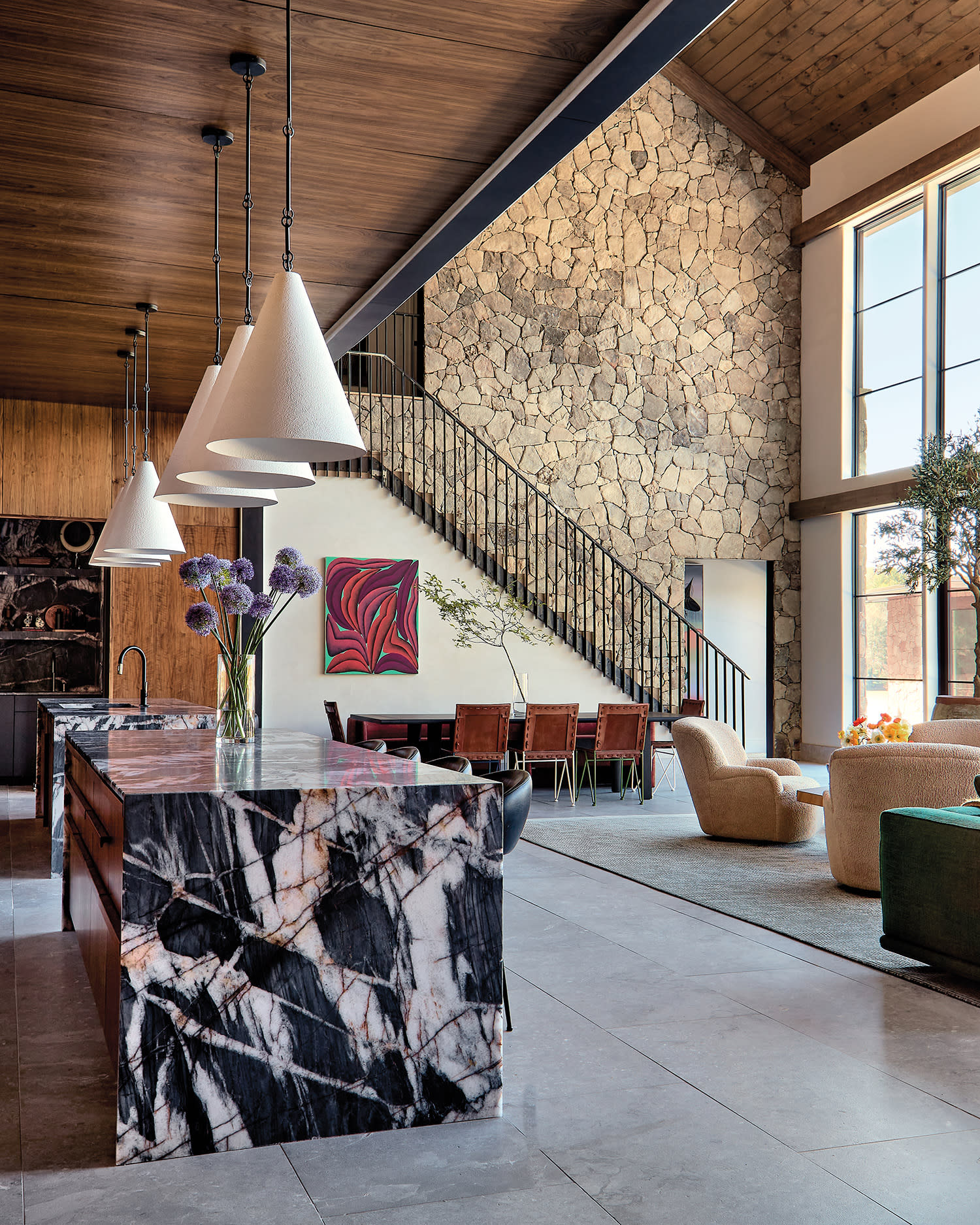
Balance between warm materials and mineral surfaces
When combining wood and stone, the first aspect to consider concerns the distribution of surfaces; using both materials indiscriminately risks creating heavy or visually fragmented environments. The most effective solution consists of defining different roles for each element: wood is generally used for floors, furniture, and vertical coverings; surfaces that come into direct contact with daily living and benefit from a warmer and more continuous visual presence. Natural stone, instead, finds a more effective placement in architectural and functional elements: worktops, feature walls, fireplaces, shower claddings, or floors in areas subject to greater wear.
This distinction allows for the creation of a legible composition; wood builds the visual backdrop of the environment, while stone introduces more structured and profound accents. Another determining factor concerns textures and tones: the grain of the wood and the veining of the stone must not compete with each other; on the contrary, it is preferable to maintain a coherent palette based on natural colors and moderate tonal variations, ensuring that surfaces dialogue without visually overlapping.
To achieve a balanced composition, it is useful to follow a few operational rules:
- allocate wood to surfaces that define the atmosphere of the room, such as floors and paneling
- use stone for technical or focal elements, such as kitchen countertops, fireplaces, or main walls
- avoid multiplying too many types of wood species and stones in the same environment
- work on moderate contrasts between warm wood tones and neutral stone colors
This approach allows for the maintenance of project legibility and enhances both materials without generating visual overload.
Natural materials, sensory perception, and continuity with architecture
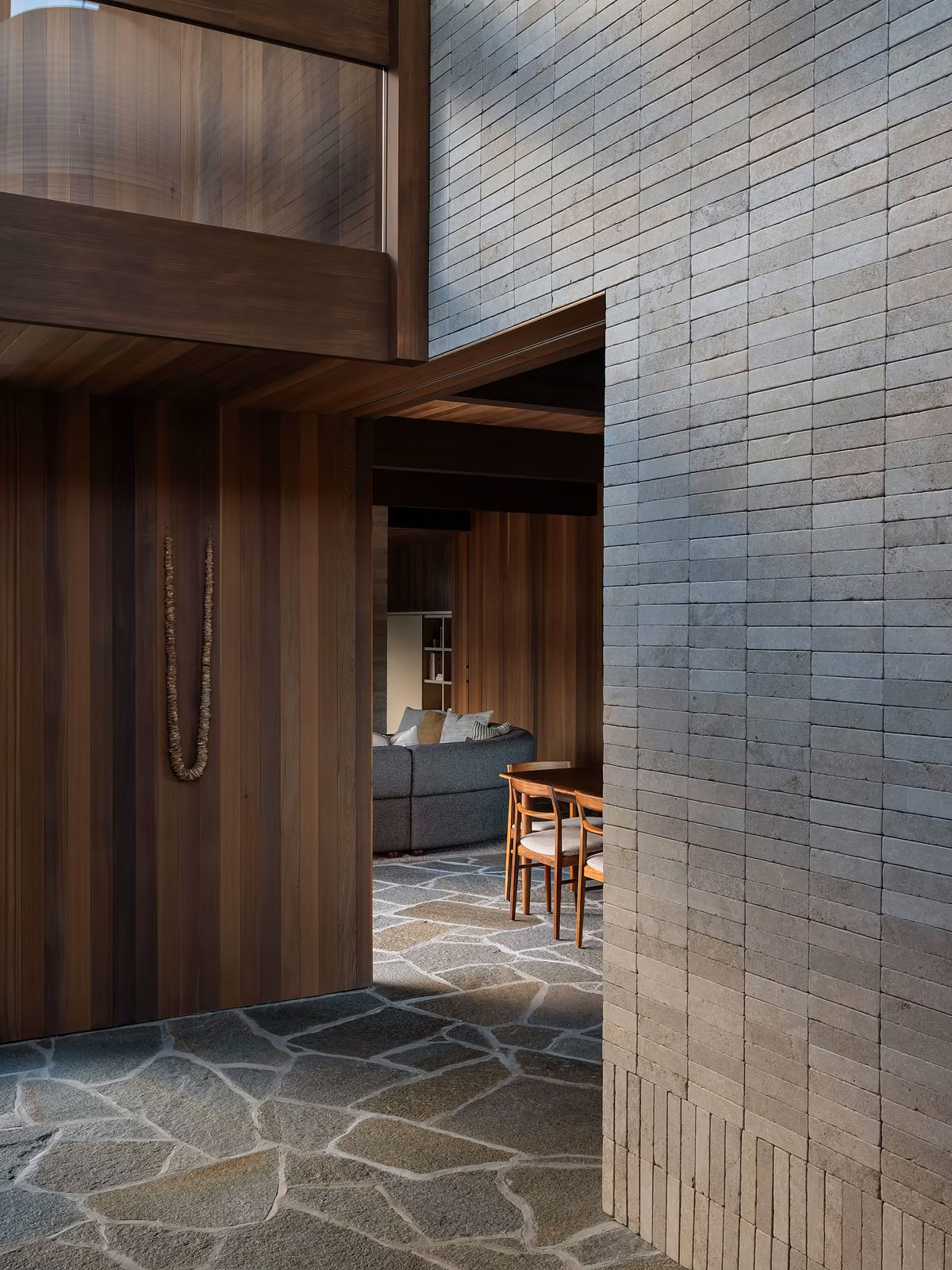
The joint use of wood and stone also influences the sensory perception of environments. Wood offers a surface that is warmer to the touch; stone, conversely, introduces a sense of solidity and stability: this alternation of materials contributes to making the space more articulated and less uniform, a quality particularly appreciated in contemporary interiors characterized by large surfaces and essential lines.
In environments such as the living room, for example, a wood floor can be paired with a stone wall or a fireplace clad in marble or travertine; the former establishes a continuous visual base, the latter becomes an architectural element that structures the space. In the kitchen, the combination works similarly: wood cabinets or paneling introduce visual warmth, while the natural stone worktop guarantees resistance and durability over time. Even in bathrooms, the meeting of these materials is particularly effective; stone is used for floors, shower claddings, or monolithic sinks, while wood appears in storage units or vertical elements that mitigate the colder perception of mineral surfaces.
In recent years, this type of material composition has often been associated with biophilic design, a design approach that favors the presence of natural materials in living environments. In increasingly technological urban contexts, the integration of authentic surfaces—wood, stone, mineral textures—contributes to creating more balanced and less artificial environments. A further advantage concerns the durability of the materials; wood and stone, if correctly selected, possess a long service life; surfaces do not lose value over time but tend to acquire character through daily use: this aspect is particularly relevant in high-quality residential projects, where the choice of materials responds not only to aesthetic criteria but also to the desire to create solid and durable environments.
Combining wood and stone in interiors therefore means working on material balance, proportions, and function; an approach that prioritizes the quality of surfaces and the clarity of the design, avoiding superfluous decorative effects and favoring solutions capable of maintaining coherence over time.
Photo credits: luxesource / The local project